Moving Our Software Factory to NVIDIA OpenShell

In our previous article, we turned github issues into codex runs. Now since the advent of NVIDIA OpenShell, I’ll teach you how to use II Agent Runtime to take that agent, and run it through openshell instead of directly though docker.
The purpose of this is to better secure our agent, rather than improve its output compared to our previous config.
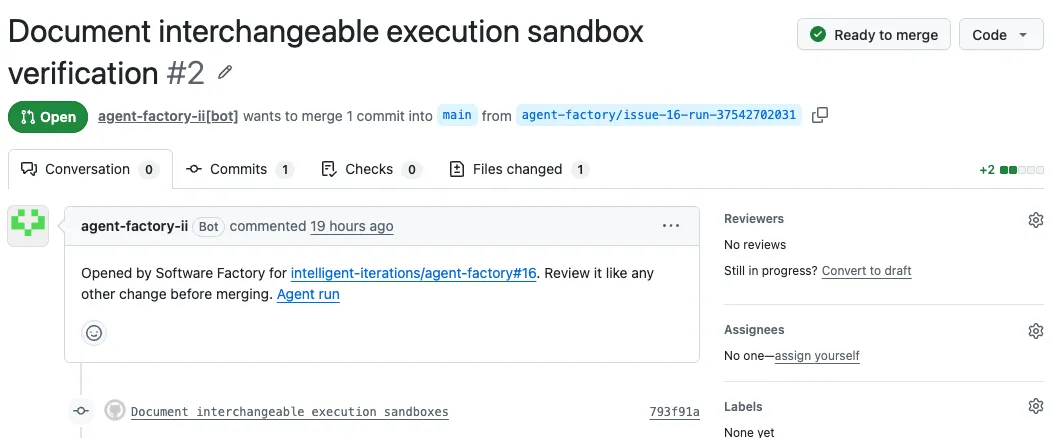
Same issue -> different sandbox -> matching PRs
Key takeaways:
- The factory kept its existing workflow. The migration changed one configuration value.
- OpenShell supplied the sandbox.
- Both runs delivered one commit, verified the push and confirmed cleanup.
- This is an experimental OpenShell 0.1.2 integration using prepared images. These original runs had dependency setup disabled; the updated adapter supports public npm dependency setup.
What changes when the sandbox changes?
The existing Docker target we had already restricted the worker's network access to the runtime gateway. Changing the config to OpenShell adapter uses OpenShell’s Docker driver, which adds explicit filesystem and network policy and requires Landlock support.
How to migrate the factory?
After updating your runtime and workflow to support OpenShell, in your runtime configuration file, change this one value:
 environment:
-  provider: docker
+  provider: openshell
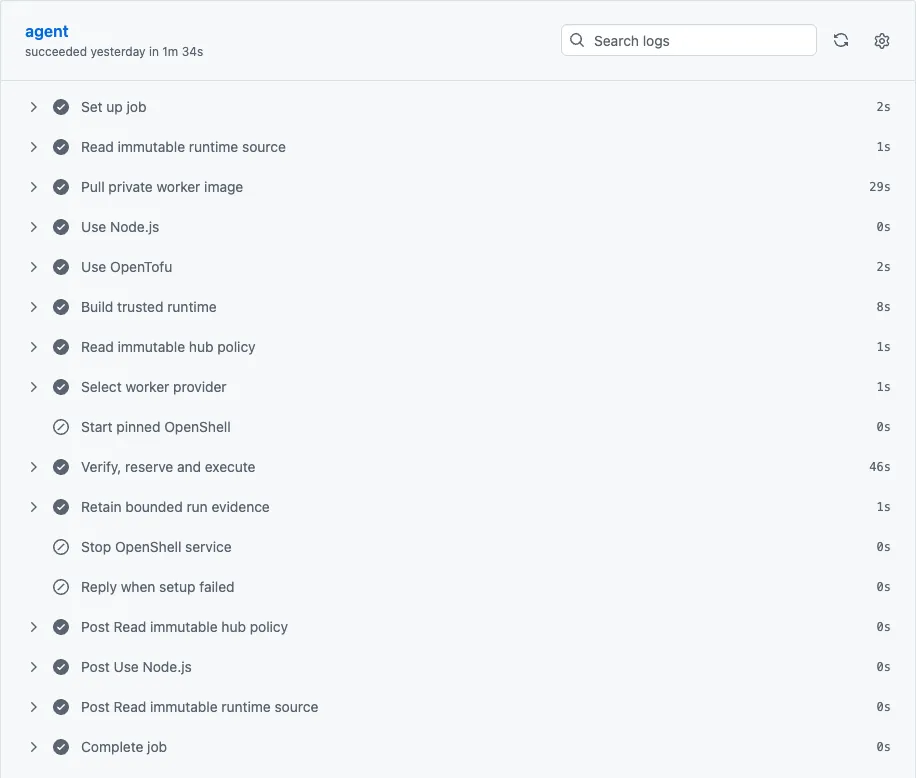
Both runs used the exact workflow except the OpenShell one had provider set to “openshell”
Did the same task produce the same result?
The task asked Codex to append a specified paragraph to a test repository's README, run its test command and push a task branch. Both issues had identical titles and bodies, and both runs started from the same base commit.
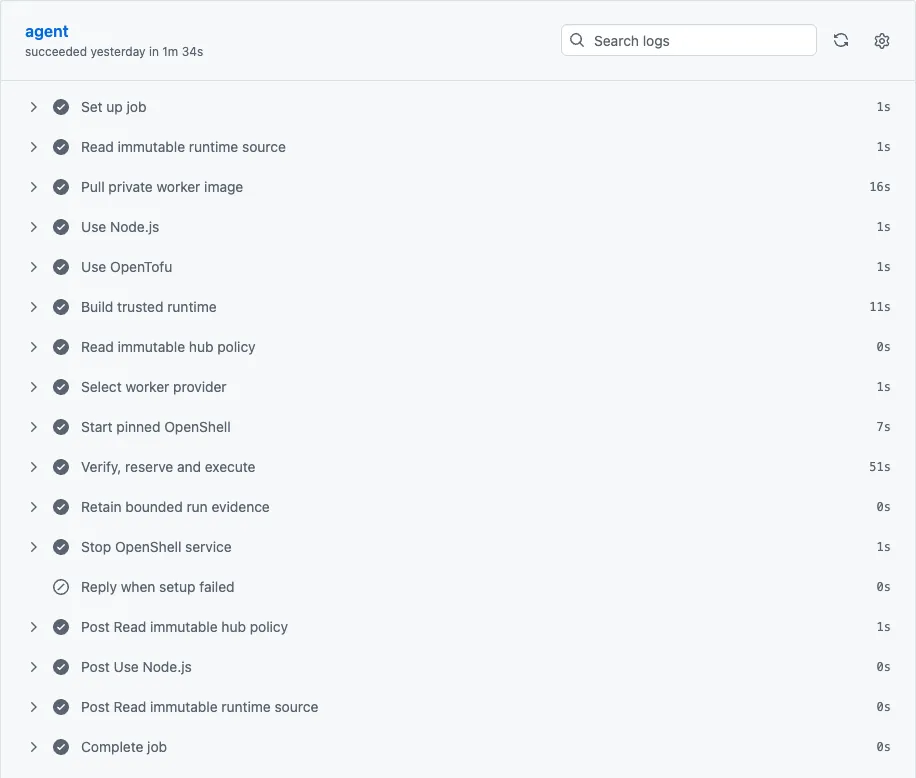
Compare the Docker job: the OpenShell steps are skipped
Try it out
 intelligent-iterations / ii-agent-runtimeSecure. Deploy. Measure. Open infrastructure for agent harnesses.
Try it on GitHub
FAQ
Does OpenShell hold the model key?
No. The runtime gateway holds upstream credentials and enforces mediated model limits. The worker only receives its scoped gateway token.